Trusted Safe Keeping
10 November 2026
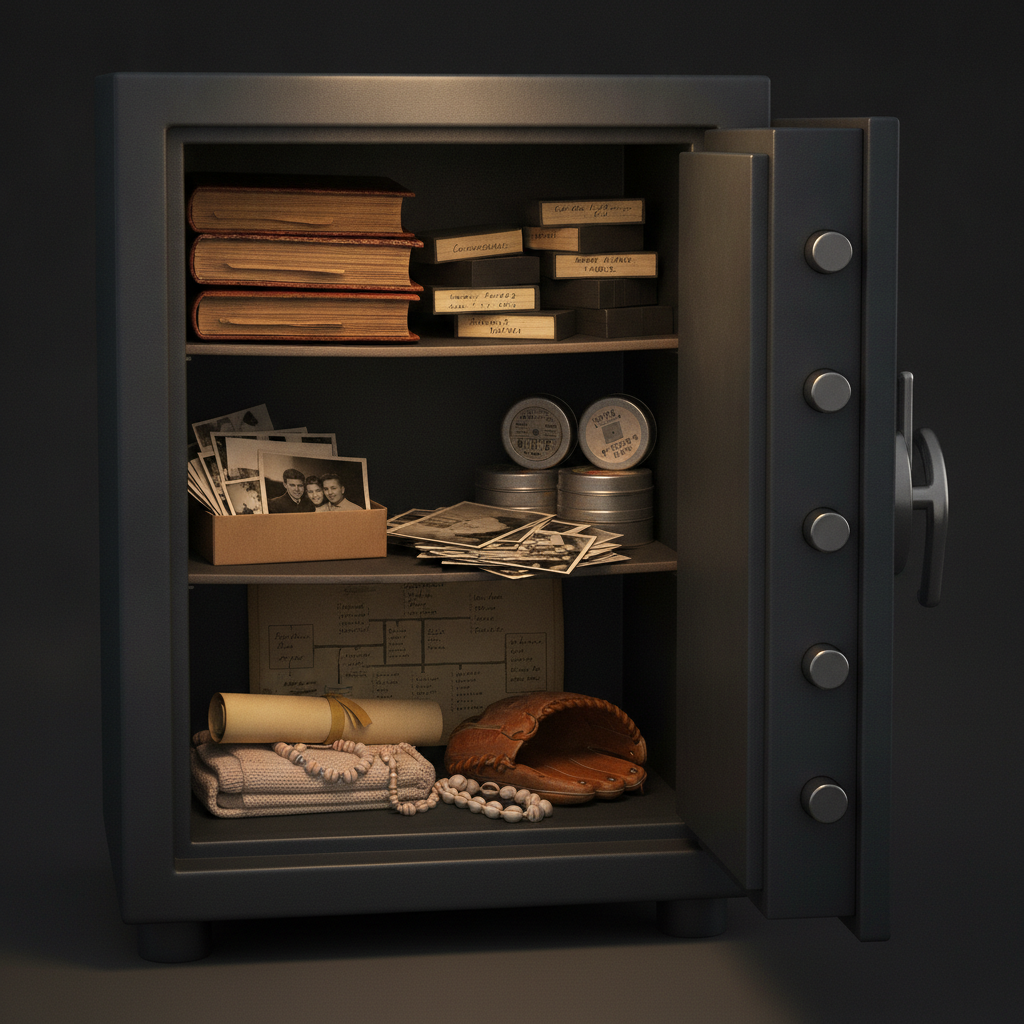
What Trusted Safe Keeping Actually Means
Trusted safe keeping is the practice of placing valuables, documents, or irreplaceable items in the care of a secure, professionally managed facility or service, under conditions that protect against theft, fire, flood, and loss. The word "trusted" matters: it implies accountability, insurance, and a clear legal relationship between you and whoever holds your things. A shoebox under the bed is storage. Trusted safe keeping is something closer to a custodial arrangement, with paperwork, access controls, and someone who answers for what happens.
For families, this often comes up at specific moments: an elderly parent moving into a smaller home, a couple inheriting jewelry they are not ready to sell, someone going abroad for a year, or a household that simply owns things too valuable to leave in a standard home safe. The question is not whether to protect those things, but how to do it in a way that is genuinely reliable rather than just reassuring.
What Safe Keeping Services Cover
Safe keeping services vary considerably in what they hold, how they hold it, and what they charge. Most fall into one of three categories.
Dedicated Safe Deposit Box Facilities
These are purpose-built vaults, usually in a city center, where you rent a physical box inside a larger secured room. You visit in person to access your items. The facility provides the outer vault security; you hold the only key to your individual box. No staff member can open your box without your presence, which is a meaningful privacy guarantee. These facilities typically hold jewelry, watches, cash, passports, deeds, and small collectibles.
Safe deposit facilities operate independently of banks in many cities, including specialist providers in London and other major urban centers. They are not the same as a bank safe deposit box, which is a product that most US banks have quietly phased out over the past two decades. Independent vault facilities have largely filled that gap.
Professional Safe Storage Facilities
A professional safe storage facility is a step up from a standard self-storage unit. It typically offers climate control, 24-hour monitored CCTV, biometric or multi-factor access, and in some cases on-site security personnel. Some facilities store items in sealed, catalogued containers rather than open units, which adds a layer of accountability. These are better suited to larger items: art, wine collections, archival documents, antique furniture, or quantities of jewelry too large for a deposit box.
Managed Custody Services
A smaller number of specialist firms offer what might be called managed custody: they collect your items, catalogue them with photographs and descriptions, store them in a high-security vault, and provide you with a digital inventory and insurance certificate. You do not access the facility yourself; you request retrieval in advance. This model suits people who want the highest level of physical security and do not need frequent access.
Safe Keeping in London: What the Market Looks Like
London has one of the most developed markets for private vault and safe keeping services outside of Switzerland. Several independent vault operators in the city offer safe deposit boxes ranging from very small (suitable for a few documents and a ring) to large enough for a substantial jewelry collection or a set of important certificates. Safe keeping London services tend to be concentrated in the West End, the City, and Mayfair, reflecting the concentration of wealth and the proximity to legal and financial advisors who often recommend these services to clients.
For US families with property, business interests, or relatives in the UK, understanding this market is useful. If you are helping an aging parent in London consolidate their valuables, or if you are an American with a second home in the UK, a London vault service may be the most practical option for items that need to stay in that country.
Prices in London vary by box size and facility tier. As a general guide, smaller boxes at reputable independent vaults tend to start at a few hundred pounds per year; larger boxes or managed custody arrangements can run to several thousand annually. Rates change, so always confirm directly with the provider.
Safe Storage for Jewelry: Specific Considerations
Jewelry deserves particular attention because it combines high monetary value with deep personal significance. A ring can be worth ten thousand dollars and also be the only physical object connecting a family to a grandmother who died thirty years ago. Losing it to a house fire or burglary is both a financial and an emotional event.
Safe storage for jewelry should meet several specific conditions:
Humidity and temperature control. Extreme heat or damp can damage certain metals, loosen settings, and degrade organic materials like pearls, coral, or amber. A quality facility maintains stable conditions year-round.
Individual accountability. The best facilities catalogue each item with photographs and written descriptions on intake. If you ever need to make an insurance claim, this documentation is essential. Without it, proving what you deposited becomes your problem.
Insurance coverage. Understand exactly what the facility's insurance covers and at what valuation. Many facilities cover items up to a stated limit per box; if your jewelry exceeds that, you may need a separate scheduled personal property policy or a rider on your homeowner's insurance. Do not assume the facility's coverage is sufficient without reading the policy document.
Access hours. If you want to wear a piece occasionally, check how access works. Some facilities require advance booking; others allow walk-in access during business hours. Managed custody services typically require 24 to 48 hours notice for retrieval.
How to Find Safe Rental Near You
Searching for safe rental near you will return a mix of results: self-storage companies that rent lockable units, independent vault operators, and occasionally jewelry stores or banks that still offer deposit services. The quality and security levels vary enormously.
When evaluating any facility, ask the following questions before committing:
- Is the facility independently audited for security standards? Look for membership in recognized industry bodies or certifications relevant to vault operations.
- What happens if the facility closes or changes ownership? Who holds your items, and what is the legal process for retrieval?
- Is there a clear, written contract that specifies your rights as a depositor?
- What identification and verification is required to access your box? (More friction here is generally a good sign, not a bad one.)
- What is the claims process if something is lost or damaged?
Word of mouth from a solicitor, estate planner, or jeweler is often more reliable than a general internet search when it comes to finding a genuinely trustworthy local option.
Monthly Safe Rental: Understanding the Cost Structure
Monthly safe rental is a common billing model for individual deposit boxes and smaller storage arrangements. It makes the cost feel manageable and allows for flexibility if your needs change. However, it is worth understanding the full cost structure before signing up.
What Affects Safe Rental Cost
Several factors determine what you pay:
Box size. The most significant variable. A small box (suitable for a few folded documents and a handful of jewelry pieces) costs considerably less than a large box that can hold multiple trays of items, rolled documents, or small collectibles.
Facility tier. A basic self-storage locker in a suburban warehouse is not the same as a purpose-built vault in a city center with biometric access and on-site guards. The price difference reflects real differences in security, accountability, and insurance backing.
Location. Urban centers, particularly major cities, command higher rents for vault space, just as they do for any commercial real estate.
Contract length. Many facilities offer a lower monthly rate for annual commitments versus month-to-month arrangements. If you know you need long-term storage, an annual contract usually saves money.
Additional services. Cataloguing, photography, insurance riders, and retrieval services add to the base cost. Some facilities include these; others charge separately.
As a rough orientation: in the United States, monthly safe rental at a reputable independent vault facility might range from under twenty dollars per month for a small box to several hundred dollars per month for a large managed storage arrangement. Prices at the high end reflect high-security urban facilities with comprehensive insurance and service. Always get a written quote and ask what is and is not included.
Professional Safe Storage: What Sets It Apart
The word "professional" in professional safe storage is doing real work. It means the facility operates under formal security protocols, carries appropriate insurance, employs trained staff, and can provide documentation that satisfies insurers, solicitors, and courts if needed.
This matters for families in particular situations:
Estate administration. When someone dies and their estate includes valuable jewelry, art, or documents, a professional safe storage facility provides a neutral, secure holding place while the estate is settled. The facility can provide access logs and inventory records that help executors account for assets.
Divorce or legal proceedings. A professional facility creates a documented chain of custody for valuables that may be subject to division or dispute.
Extended travel or relocation. If a family member is moving abroad, entering a care facility, or simply downsizing, professional storage provides continuity of care for items that cannot travel or that the family is not ready to distribute.
High-value collections. For families that have accumulated significant jewelry, watches, coins, or art over generations, professional storage is often the most practical way to maintain and insure a collection without the cost and risk of keeping everything at home.
Practical Steps to Set Up Trusted Safe Keeping
If you are ready to move valuables into professional safe keeping, the process is more straightforward than many people expect.
Step one: Take stock. Before approaching any facility, make a list of what you want to store, with approximate values. This helps you choose the right box size and ensures you have a baseline inventory before anything leaves your hands.
Step two: Get items appraised if needed. For jewelry or collectibles with uncertain value, a professional appraisal before storage is worthwhile. It establishes value for insurance purposes and gives you documentation you may need later.
Step three: Photograph everything. Photograph each item individually, with a scale reference if possible, before depositing it. Keep copies of these photographs somewhere other than the facility itself.
Step four: Read the contract carefully. Understand the access terms, the insurance coverage, the notice period for ending the arrangement, and what happens to your items if you stop paying or cannot be reached.
Step five: Tell someone you trust. At least one other family member should know where the items are stored, how to access them in an emergency, and where the relevant paperwork is kept. Safe keeping that only one person knows about can become a serious problem when that person is ill or dies.
Safe Keeping and Family Archives: A Note
For families who are also preserving photographs, letters, and documents alongside physical valuables, the two tasks are related but different. Physical documents and photographs can be stored in a safe deposit box, but the conditions matter: paper and photographic prints need stable humidity and temperature, and they should be stored in acid-free sleeves or folders rather than loose in a metal box.
For the digital side of a family archive, a separate approach is needed. Physical safe keeping protects the objects; a well-organized digital archive protects the images and stories attached to them. The two work best together: originals stored safely, digital copies organized and accessible to the family.
Summary: Choosing the Right Safe Keeping Arrangement
Trusted safe keeping is not one-size-fits-all. The right arrangement depends on what you are storing, how often you need access, where you are located, and what level of documentation and insurance your situation requires. A small safe deposit box at a reputable local vault is sufficient for most families with a modest collection of jewelry and important documents. Larger or more complex situations, including estate administration, high-value collections, or items in a different country, may call for managed custody or professional safe storage with a formal cataloguing service.
The most important thing is to choose a facility with a clear legal structure, written contracts, and insurance you have actually read. Trusted safe keeping earns the word "trusted" through transparency and accountability, not through marketing language.